
Best Practice for Verifying Salt in Crude Analysis: The Role of Reference Materials
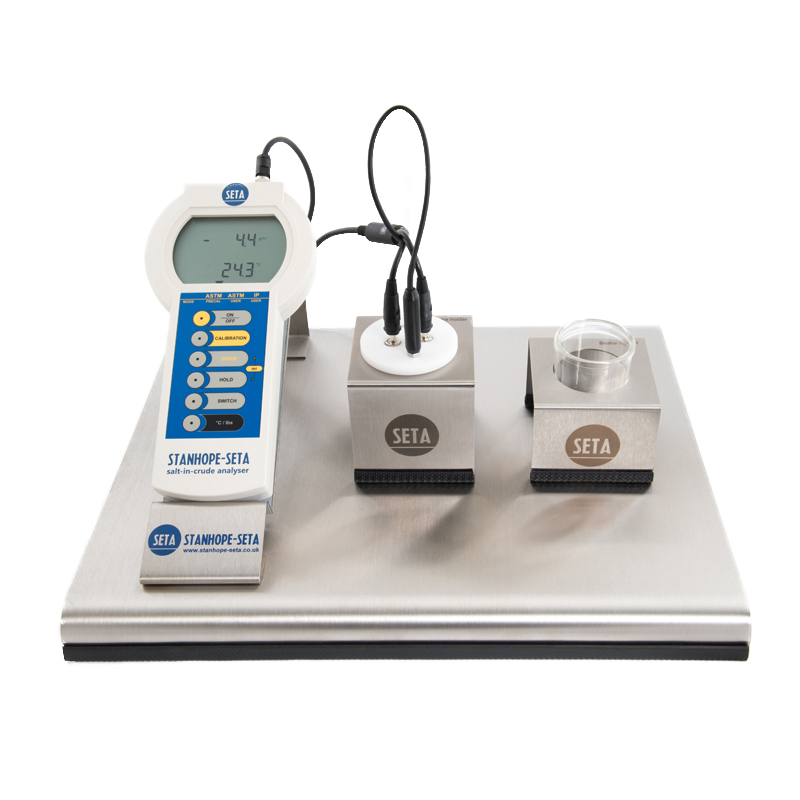
Accurate determination of salt content in crude oil is critical for protecting downstream processing equipment, maintaining product quality and meeting contractual and regulatory requirements. For laboratories using a Salt in Crude Analyser, ensuring ongoing instrument performance is just as important as initial calibration.
One of the most effective ways to maintain confidence in results is through the routine use of a reference material.
Why routine verification matters
Even well-maintained analysers are subject to gradual changes in performance over time. Factors such as environmental changes and routine wear can all influence results. Routine verification allows laboratories to:
- Confirm analyser performance between calibrations
- Detect drift or bias at an early stage
- Reduce the risk of reporting non-conforming results
- Provide documented evidence of control during audits
For many laboratories, verification checks are incorporated weekly, monthly, or following maintenance or unexpected results.
The limitations of in-house prepared solutions
Some laboratories prepare their own salt solutions for verification purposes. While this may appear cost-effective, it introduces several sources of uncertainty, including:
- Weighing and dilution errors
- Variability in salt composition
- Inconsistent preparation techniques between operators
- Limited traceability for audit purposes
These factors can make it difficult to distinguish between analyser issues and preparation-related variability.
The benefits of using a reference material
A reference material provides a known, traceable concentration with documented uncertainty, offering a reliable benchmark for performance verification.
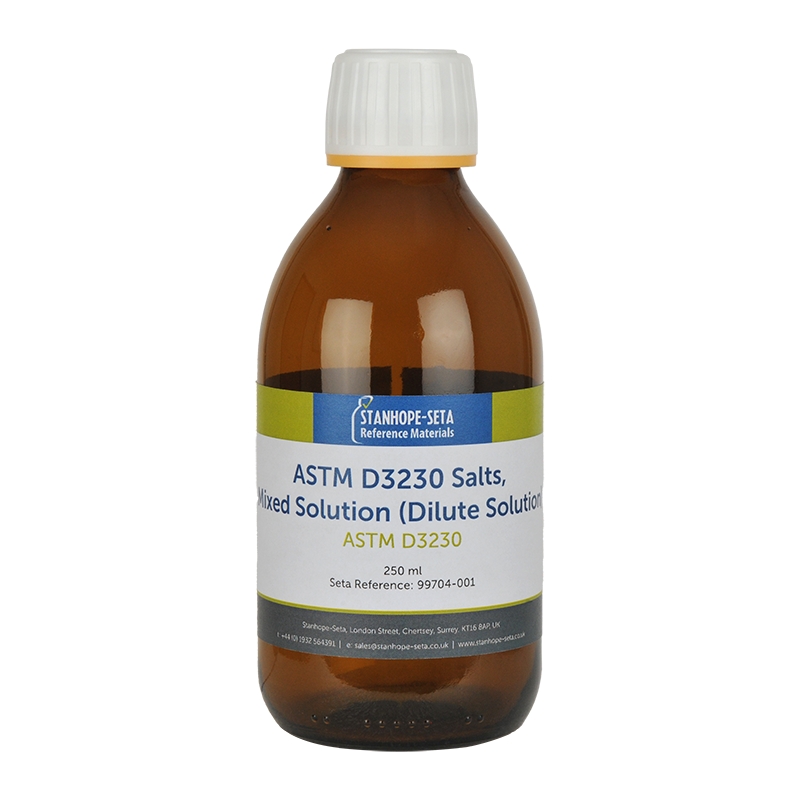
Produced in general accordance with the principles of ISO 17034 and ISO 33405, the Salt in Crude Mixed Salt Solution (99704-001) has been specifically developed for use with the Stanhope-Seta Salt in Crude Analyser and supports good laboratory practice by providing:
- Certified concentration with full documentation
- Traceability suitable for quality systems and audits
- Ready-to-use formulation, eliminating preparation variability
- Consistent, reproducible verification results
Using a reference material enables laboratories to demonstrate objective control of their analytical system, supporting both internal quality reviews and external inspections.
Integrating reference materials into a QC programme
As part of a robust quality control programme, laboratories should record:
- Reference material batch number and expiry date
- Measured result versus certified value
- Acceptance criteria and pass/fail status
- Any corrective actions taken if results fall outside limits
Over time, these records can be used to identify trends, optimise maintenance schedules and strengthen confidence in reported data.
Supporting confidence in salt determination
Salt in crude analysis plays a vital role in refinery operations and crude trading decisions. Incorporating a certified reference material into routine verification is a simple but effective step toward maintaining analytical integrity and audit readiness.
The Salt in Crude Mixed Salt Solution (99704-001) provides laboratories with a practical, traceable solution for confirming analyser performance and supporting consistent, reliable results.
View the product here: Salt in Crude Mixed Salt Solution (99704-001